
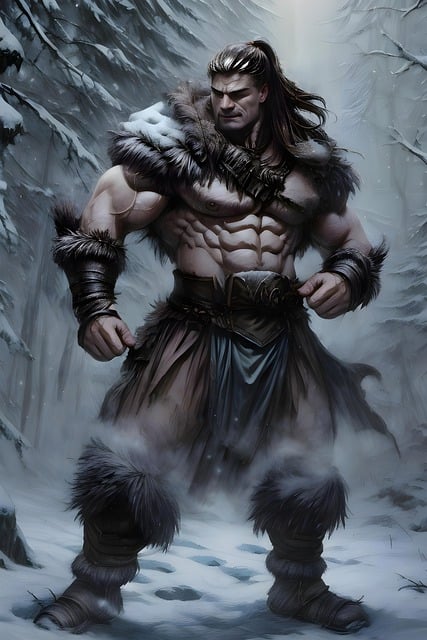
Review of “The Wizard Slayer”, by Franklin Roberts

The Wizard Slayer, book 1 in The Wizard Slayer Saga by Franklin Roberts is a fantasy story infused with a pure sword-and-sorcery spirit. Given that I just finished reading this book, I decided I had to talk about it.

First, I’ll explain my thoughts without dropping spoilers so that if you like the sound of this book, you can still see what I have to say before you pick it up for yourself. Just know, later I will be talking spoilers. When that happens, I’ll give a warning.

The Wizard Slayer wastes no time, dropping us straight into a world of sword and sorcery. This unnamed setting and the worldbuilding behind it was the strongest component of this book. From the mega city of Saidal to the savage Outlaw Kingdoms to the hints at a past steeped in technology and development, every little detail added to the immersion. Roberts’ take on classic fantasy races was also a refreshing and welcome change from the norm.

Concerning characters, the story introduces us to Krael, a barbarian harkening back to Robert E. Howard’s Conan, whose sole mission is to hunt and kill magick users and rid them from the earth. We’re also introduced to a surprisingly large cast of side characters, including Eledrith, a prince with a strange ubringing, and Morgvid, an assassin hired to hunt the Wizard Slayer. Quite like the setting and worldbuilding, the characters all felt unique and truly inspired, far from shells of people or classic trope fillers. That being said, some of the dialogue left something to be desired, and made some characters come off as wooden or just strange. The characters of Darreth and Eledrith in particular suffered, and much of the dialogue came from them. Many times their conversations and sentences sounded awkward or too complex for their own good. Ironically, the most believable character in his dialogue style and use was Krael, who as a savage barbarian hardly spoke at all. The other main low point involving characters were the love stories developed in the novel. They both could’ve used more time to be fleshed out, though the main one ended in a twist I didn’t see coming at all.

The plot of The Wizard Slayer took many more twists and turns than I expected. From the synopsis of the book, I believed it would be straightforward, but I was wrong. A lot of events occurred in this book. That’s not to say this was a bad thing, though. Everything flowed and connected quite seamlessly. The Wizard Slayer slays a lot of wizards, so the book lived up to its title. Both Krael and Eledrith’s stories had me engrossed, and when they often crossed paths, I was invested even more. One thing that may bother you, and the biggest criticism I have for the book however, is that it really could’ve used another proofread. A few names throughout the book are misspelled at times, and the book has a lot of wrongly used homophones, such as using “knocked” an arrow instead of “nocked”. So, I was able to look over these without it breaking my immersion too much, but typos and errors that could’ve been caught in a final proofread are present.

Overall, without spoiling anything, I can safely say that I recommend The Wizard Slayer by Franklin Roberts. If you’re into sword and sorcery, or looking for a modern equivalent to a Robert E. Howard story in feel, this book is for you. If you want a fantasy book that has a unique take on classic tropes without deconstructing them, this is a good bet.

Now, let’s get into some spoilers. As far as setting and worldbuilding, this book had exactly what I was looking for in the fantasy genre right now. It’s a fantasy world, but it originated from a sci-fi past. Broken machines such as the Dead Giant dot the landscape, and there are hints of computers and ancient technological empires like that of Ashkazanar that fell and were never revived because no one knew how to work the technology. Brilliant. Also, like I noted earlier, the twist on common fantasy races was refreshing. In this world, elves are hunted for their blood, which aids in magick, and are thus quite rare and almost extinct. Dwarves, meanwhile, have lived in caves so long that they somewhat resemble the Falmer of the Elder Scrolls: shriveled, primitive creatures that have become incestuous and cannibalized, far from the great race they were in ages past. The city of Saidal, with skyscrapers in a fantasy world, and the drenoch people, a savage race of man captaining iron ships were also inspired worldbuilding choices.

There isn’t anything new I have to say about the characters, except that I really dug them all, no matter how large or small their role. The main cast of Krael, Darreth, Eledrith, Sir Garrick, Lorienne, Count Ordric, and Morgvid were all compelling or interesting, and even small characters like Arngrim the Scourgefather and Akhred the Eternal made me want to know more about them. Still though, like I noted earlier, the worst aspect of the characters was the dialogue, which could’ve been more concise or realistic in my opinion.

Finally, let’s talk a bit more about the plot. While Krael killing multiple wizards was a lot of fun and the best part of the book, I enjoyed Eledrith’s storyline of coming into his own as a prince just as much. How he earned the loyalty of not only his subjects but of foreign mercenaries was well executed by Roberts. But getting back to Krael, there is one issue I have with his plotline: I felt as though the inciting incident for his flight from Saidal wasn’t made as clear as it could’ve been, or that the stakes behind it weren’t shown to be as important as they were at first. Krael didn’t want to be a puppet to Count Ordric, and though that’s understandable, it was hard to pick up on why that was such an issue until much later in the book. Speaking of Ordric, his descent into hysteria and his feud and battle with Krael was a satisfying conclusion to the A plot of the story, and it couldn’t have been much better. Pivoting now back to Eledrith, his romance with Morwenna was okay, but I personally wanted them to spend more time together on page in order to better believe their romance. The end of the novel left me stunned though. Krael accidentally killed a bewitched Morwenna in his quest to slay Ordric, turning Eledrith against him in the process. This in turn drove Eledrith to decide he could dabble in magic, meaning that Krael will ultimately have to try and kill him. Now that’s a good twist, and a promising premise for the rest of the series.

So, while The Wizard Slayer by Franklin Roberts was far from perfect, it met my expectations as an indie fantasy book. It falls victim to multiple issues plaguing self published books today, but the contents and creativity of the work catapult it past those hindrances. Once again, I can say I recommend The Wizard Slayer.

The Checkered Cloak

A Short Story

By Russell A. Wells

Copyright © 2023 Russell A. Wells

All rights reserved

This work may not be scanned, reprinted, uploaded, or distributed, in whole or in part, for profit or not, without prior express written permission of the author. This is a work of fiction. All characters and events portrayed herein are fictitious; any resemblance to actual events, locales, or persons, living or dead, is completely coincidental.

Sensations of hot and cold slathered Abel’s body all at once. While his back faced the crisp, dismal frost of night, his front bathed in the warmth of the fire before him. His shoulders slouched from the dense layers of tunics and pelts covering him, topped by his lucky blue and red patchwork cloak. None of the clothes did anything to keep Abel warm, and he supposed he wore them all only out of habit. The fire was the sole provider of solace from the chilling night air.

“Do you think we’re out of range of the walls?” piped a voice from beside him.

Abel turned to behold the man from which the question originated. Fenwick was a nervous sort of man, sharing more characteristics with a squirrel than with most other humans. He bit at his nails ferociously, like a squirrel gnawing on a nut. The light of the flames danced across his face, increasing the bulging appearance of his eyes to near absurdity. He waited with baited breath for Abel to answer his question.

“We should be quite safe here.”

“Are you sure?” Fenwick asked before Abel had a chance to close his mouth. “They have mages among them. It’s said that mages have heightened senses. They may still be able to see us!”

Abel sighed. “I assure you, we’re quite alright. Those are just tall tales.”

Fenwick tittered but pushed Abel no further. The latter man rose and placed another log on the fire, sending a cacophony of swirling sparks into the night sky. Fenwick yipped softly.

Returning to his seat atop the flat stump, Abel stroked at his grisly brown mustache with a gloved hand. He gazed into the flames until they seared his vision, pondering deep and dark thoughts.

“I think we should move farther away from the fort,” Fenwick said.

His partner’s nasally voice pierced Abel’s consciousness, sucking him back to the present moment.

“By the gods,” Abel said. “You worry more than my mother.”

“I’m sorry,” Fenwick said.

Abel grunted.

“B-But aren’t you worried, too?” Fenwick asked. “After all, they seemed to really hate you.”

“No, I’m not, and yes, they did.”

Falling silent again, Fenwick wrapped his arms about himself, visibly shivering. Abel eyed his jittery companion from the corner of his vision, snorting under his breath. Neither man spoke for awhile, instead watching as the ashes from the fire merged with the light snowflakes that’d begun to fall from the sky. Abel poked absentmindedly at the kindling with a stick he’d found lying at his feet. Every now and again, he fetched a glance at Fenwick.

“Is this fire warming you up?” the squirrely man spoke.

“Yes,” Abel said.

“Not me,” said Fenwick.

Abel smiled grimly, unbeknownst to the other man.

“Here, take my lucky cloak. It always seems to help.”

Abel stood and shrugged the red-blue checkered garment from his shoulders. Clutching it with one hand, he offered it out to Fenwick. His partner snatched it from his grasp, tossing it about his own scrawny shoulders. Fenwick tucked the sides of the cloak beneath his knees, enveloping himself in a red-blue cocoon.

“You have my thanks,” Fenwick said.

“You have my sympathies,” Abel retorted.

A quizzical expression crossed Fenwick’s face, but was quickly replaced by a contortion of pain. He slumped forward, only a muffled grunt escaping his lips before he died. Planted deeply in his back was the shaft of an arrow. It glowed a faint, sickly green, emanating light separate from that of the fire.

Abel sucked in a breath. “Mage’s work.”

Smothering the flames and stamping on the coals, Abel made quick work of the fire. He grabbed his pack from where it sat leaned against a tree and started off in the direction opposite the fort at his back. Turning, he spared one last look at the campsite. It was dark and barren, the only light coming from the magic arrow. Beneath it, Abel left a dead man wrapped in his lucky checkered cloak.

THE END.

Review of “Blue Beetle”

Since the release of Spider-man: No Way Home, not a single superhero movie or show has drawn any of my interest or attention, until Blue Beetle. Don’t be mistaken, I was aware of the high probability of mediocrity, but two aspects in particular made me partial to the film. First is the casting of Xolo Maridueña as Jaime Reyes, and second, the character of Blue Beetle and his relative obscurity in comparison to many other DC heroes. What follows is my review of Blue Beetle, from the good to the bad to everything in between. There may be light spoilers ahead, so tread carefully if you wish not to spoil the movie for yourself.

First, I’ll start with the good. The best aspect of this movie was exactly what I hoped: Xolo Maridueña as Jaime Reyes/Blue Beetle. It felt as though Maridueña was born for this role, and he proved it in the film. He is one of the most faithfully-adapted superheroes I’ve seen in a long time, both on and under the surface of the character. The other standout actor/character was George Lopez as Jaime’s wacky Uncle Rudy. His main purpose in the film was comedic relief, and he delivered almost every chance he got. He was quite hilarious.

Another positive characteristic of the film was the theme and dynamic of family. While I had my issues with some of the messaging surrounding Jaime’s family as well as their role in the finale of the film, I couldn’t help but smile at the connection between the group that was presented on screen. In particular, it was heartwarming to finally see a positive, competent, loving, and protective father figure. It feels as though most Hollywood movies have been stripped of that for some time.

The final positive aspect of the movie I want to highlight was the references and use of the deeper Blue Beetle lore. Though many superhero movies are criticized for their countless hints, easter eggs, and cameos that lead nowhere, not only did Blue Beetle have many of its own, it made them meaningful. As a genuine fan of the character and back story, I was thrilled to see the Dan Garrett and Ted Kord suits, as well as Ted Kord’s ‘”Beetle” airship. And they weren’t just there for spectacle either, but tied into the world and the plot of the movie itself. Everything was better fleshed out because of the references, not in spite of them. All of it reminded me of the first two Ant-Man films in the best of ways.

Now, let’s move onto the negatives because there are multiple. Firstly, the villains were predictably forgettable. Victoria Kord was the typical billionaire-CEO who wants to make weapons of mass destruction to “create a safer world”. We’ve seen that so many times already, and there was no unique spin, so she was nothing special. Similarly, Carapax was a copy-paste antagonist as well. He felt like an amalgamation of Ironmonger and Whiplash from the first two Iron Man movies put together, but he also didn’t bring anything new to the character trope he occupied. So while the two villains were fine, they felt more like placeholders than anything else.

The next negative I wanted to highlight was also predictable in the most irritating way. The film was layered with “subtle” political messages and jabs throughout. This should be no surprise, and I expected as much going in, but I still cringed and lost immersion when they were uttered. Surely the writers of the film patted themselves on the back, reveling in how clever they were, when in reality the large majority of the population can see how hamfisted and forced their agendas are into this film and the ones like it. This trend in superhero movies has been developing for a few years now, and Blue Beetle was no exception to the rule. Some throwaway lines included, “Batman’s a fascist!” and a claim that Ted Kord’s father was a sexist for leaving the company to his son and not to Ted’s older sister Victoria. To make matters worse, that latter line was uttered by Ted Kord’s own daughter, a beneficiary of her father’s inheritance! To top it all off, this movie had a very us-vs.-them mentality that could’ve been done well, but was instead very surface-level and low effort. Poor Mexicans good! Rich white people bad! No nuance existed, but that’s all par for the course for modern Hollywood blockbusters.

Finally, this movie was just very bland. The costumes were cool, but many of the DCEU elements were still present visually. Everything was dark and on fire by the end. The beginning was promising, as the atmosphere was light (in a physical, not emotional sense), but again it devolved into the old way of doing things. Almost everything about this film was forgettable, and I think most people realized this beforehand based on the trailers. Blue Beetle really brought nothing new to the superhero movie table, which I found to be a lamentable fault.

I knew what I was getting into going to see Blue Beetle, and it perfectly met my expectations. Xolo Maridueña as Jaime Reyes/Blue Beetle was the best part by far, while some side characters, family dynamics, and meaningful lore added to my enjoyment. Boring villains, forced political messages, and overall mediocrity tarnished the film, however, and I can concretely say Blue Beetle is exactly what we all thought. If you’re still on a superhero kick or want to support the great young Cobra Kai actor like I did, go enjoy it! But if you’re tired of the sameness of the genre in recent years and the “Hollywood message” jabs underneath every film, than you probably don’t need me to tell you to skip this one. DC seems lost in the realm of movies, and Blue Beetle gives no indication that it will be of any help resolving that issue.