Featured

The Checkered Cloak

A Short Story

By Russell A. Wells

Copyright © 2023 Russell A. Wells

All rights reserved

This work may not be scanned, reprinted, uploaded, or distributed, in whole or in part, for profit or not, without prior express written permission of the author. This is a work of fiction. All characters and events portrayed herein are fictitious; any resemblance to actual events, locales, or persons, living or dead, is completely coincidental.

Sensations of hot and cold slathered Abel’s body all at once. While his back faced the crisp, dismal frost of night, his front bathed in the warmth of the fire before him. His shoulders slouched from the dense layers of tunics and pelts covering him, topped by his lucky blue and red patchwork cloak. None of the clothes did anything to keep Abel warm, and he supposed he wore them all only out of habit. The fire was the sole provider of solace from the chilling night air.

“Do you think we’re out of range of the walls?” piped a voice from beside him.

Abel turned to behold the man from which the question originated. Fenwick was a nervous sort of man, sharing more characteristics with a squirrel than with most other humans. He bit at his nails ferociously, like a squirrel gnawing on a nut. The light of the flames danced across his face, increasing the bulging appearance of his eyes to near absurdity. He waited with baited breath for Abel to answer his question.

“We should be quite safe here.”

“Are you sure?” Fenwick asked before Abel had a chance to close his mouth. “They have mages among them. It’s said that mages have heightened senses. They may still be able to see us!”

Abel sighed. “I assure you, we’re quite alright. Those are just tall tales.”

Fenwick tittered but pushed Abel no further. The latter man rose and placed another log on the fire, sending a cacophony of swirling sparks into the night sky. Fenwick yipped softly.

Returning to his seat atop the flat stump, Abel stroked at his grisly brown mustache with a gloved hand. He gazed into the flames until they seared his vision, pondering deep and dark thoughts.

“I think we should move farther away from the fort,” Fenwick said.

His partner’s nasally voice pierced Abel’s consciousness, sucking him back to the present moment.

“By the gods,” Abel said. “You worry more than my mother.”

“I’m sorry,” Fenwick said.

Abel grunted.

“B-But aren’t you worried, too?” Fenwick asked. “After all, they seemed to really hate you.”

“No, I’m not, and yes, they did.”

Falling silent again, Fenwick wrapped his arms about himself, visibly shivering. Abel eyed his jittery companion from the corner of his vision, snorting under his breath. Neither man spoke for awhile, instead watching as the ashes from the fire merged with the light snowflakes that’d begun to fall from the sky. Abel poked absentmindedly at the kindling with a stick he’d found lying at his feet. Every now and again, he fetched a glance at Fenwick.

“Is this fire warming you up?” the squirrely man spoke.

“Yes,” Abel said.

“Not me,” said Fenwick.

Abel smiled grimly, unbeknownst to the other man.

“Here, take my lucky cloak. It always seems to help.”

Abel stood and shrugged the red-blue checkered garment from his shoulders. Clutching it with one hand, he offered it out to Fenwick. His partner snatched it from his grasp, tossing it about his own scrawny shoulders. Fenwick tucked the sides of the cloak beneath his knees, enveloping himself in a red-blue cocoon.

“You have my thanks,” Fenwick said.

“You have my sympathies,” Abel retorted.

A quizzical expression crossed Fenwick’s face, but was quickly replaced by a contortion of pain. He slumped forward, only a muffled grunt escaping his lips before he died. Planted deeply in his back was the shaft of an arrow. It glowed a faint, sickly green, emanating light separate from that of the fire.

Abel sucked in a breath. “Mage’s work.”

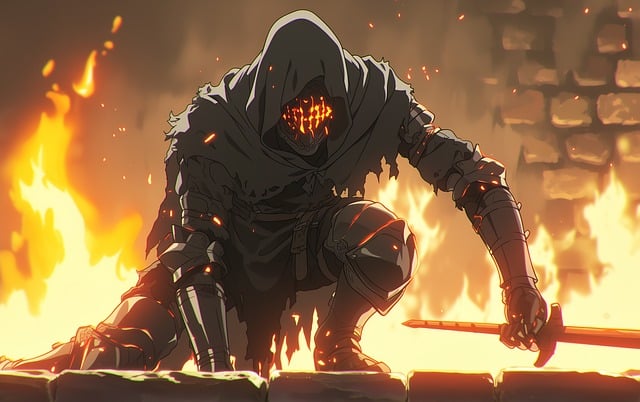
Smothering the flames and stamping on the coals, Abel made quick work of the fire. He grabbed his pack from where it sat leaned against a tree and started off in the direction opposite the fort at his back. Turning, he spared one last look at the campsite. It was dark and barren, the only light coming from the magic arrow. Beneath it, Abel left a dead man wrapped in his lucky checkered cloak.

THE END.

An Exciting Announcement: My debut novel, available NOW

After over a year of work and preparation, the time is finally here! My debut novel, The Ring and the Shadows, Book 1 in the Cade Gowan and the Round Table series is available now on Amazon in eBook and Paperback formats.

This book was heavily inspired by the nostalgia I felt for Harry Potter, Percy Jackson, and other middle grade/YA low fantasy stories I read in my youth. By combining those tropes with Arthurian legend, The Ring and the Shadows is the end result.

Whether you’re buying it for yourself, your kids, your friends, or anyone in between, I hope you check out this book. It would mean the world to me.

Why the Revenge of the Sith Re-Release is Generating So Much Hype

Star Wars has long been on the forefront of the cultural and entertainment spheres. From its meteoric rise, to its prolonged success, to its recent hardship, the story built and created by George Lucas has established itself as an intellectual property on the bleeding edge of the cultural zeitgeist. For most fans, The Empire Strikes Back or the original trilogy as a whole is the pinnacle of the franchise, and for good reason. However, at the time this is being written, Episode III, Revenge of the Sith, has just been re-released in theaters for its 20th anniversary. The prequel trilogy is much more divisive than the original trilogy. And while The Phantom Menace and Attack of the Clones are judged harshly, this recent re-release has exposed a truth: Revenge of the Sith is something far greater. For some, this comes as a shock. For others like myself, it feels as though everyone else is finally stepping into the light we have long seen. Today, I wish to examine why the Revenge of the Sith re-release is generating so much hype, and what it all means.

            The first reason the Revenge of the Sith re-release has been a massive success has all to do with demographics. Through anecdotal evidence, though not exclusively so, it is plain to see. Personally, when this film first premiered, I was a child. I did not see it in theaters, as my parents thought the Emperor was too scary for me, but I remember the movie coming out. But what’s more, I remember all the Star Wars hype surrounding it. Books, video games, toys, Star Wars Revenge of the Sith was everywhere. Posters of Anakin and Obi-Wan and Yoda and Darth Vader and Palpatine hung in every library and in the windows of every bookstore and comic shop. At school, my friends and I would discuss and debate the most powerful Jedi and Sith, and who would win in a fight between Anakin and Luke when each were at their full potential (Anakin). And my story is just one amongst many. I believe the driving force behind the eruption of the Revenge of the Sith re-release are the people who were kids when the movie first debuted. They were the ones who fell in love with Star Wars because of Anakin, not Luke. And now, they, like me, are grown, but the love for this film has not subsided in the least. The masses are yearning for a film of true quality in theaters, and the call of an old friend, the familiar face of this movie is more than enough to draw them back.

            Secondly, in a take that may be more controversial than I believe it should be, Revenge of the Sith has always been good. It was and still is the best of the prequels, but in my opinion, is also one of the best in the entire Star Wars saga. On any given day, I may rank it before Empire as the best. And while I know, The Empire Strikes Back is superior on many levels both tangible and subliminal, Revenge of the Sith is just as capable in many ways of its own. For one, the performances are superb, far greater than the previous prequels. Hayden Christiansen’s portrayal of Anakin Skywalker in this film nearly perfect. Ewan McGregor as Obi-Wan, Samuel L. Jackson as Mace Windu, Natalie Portman as Padme Amidala, and Ian McDiarmid as Palpatine also shine. And while there is some stunted dialogue, there are also countless lines that are both memorable and profound. The visuals are stunning to this day, and the story is Shakespearean. The more Revenge of the Sith ages, the more I believe it will be recognized as a defining film of its era, especially due to the timeless themes and ideas it depicts through its story and characters.

            In a similar vein, Revenge of the Sith remains popular due to its emotional weight and ability to resonate with audiences on a deep level. As previously mentioned, the conflicts detailed within the film feel much greater than just a whimsical space opera. Of course, there are light-hearted moments, along with a treasure trove of quotable lines. But, amidst all that, the heart of the story George Lucas was trying to tell shines through. Revenge of the Sith just feels like a genuine work of art, labored over by a man full of passion and conviction for the story he wished to tell. And this story is a significant one. It is the fall of a free society into tyranny. It is the depiction of what the burden of the world can do to a man. It is the fall of a hero into despair, in which he nearly kills his wife and ends up hating his near-brother. It is good versus evil like the original trilogy, yes, but it is filled with greater nuance still. The focus is on Anakin’s fall from Chosen One to slave of darkness, but the conflict in every facet of his life leading to this collapse is executed to perfection. His marriage is forbidden, and thus he must hide it. His relationship with his Order is rocky, and so he must tolerate it. His friendship with the Chancellor is revealed to be against everything he is supposed to believe, and so he must choose. All these little battles and more contribute to his fall from grace, and upon multiple viewings, this is more evident in the best way. Revenge of the Sith is a powerful film, and stories that can evoke such strong feelings leave a lifelong impression on their audience.

            As a small aside, I do not want to make this discussion a generational one. However, I did want to highlight this briefly, especially in tandem to my first point about the returning audience for the film. While Generation X has had decades to rave about their experiences in theaters as children during the release of the original trilogy, the hype and success surrounding the re-release for Revenge of the Sith just feels like a win for Gen Z (and younger millenials). Of course, it goes without saying that the audience for Episode III spans multiple generations and demographics, but Revenge of the Sith was the hill for Gen Z Star Wars fans to die on. And now, as it proves its worth once again, we can say our Star Wars movie is recapturing its deserved acclaim. In days that have seen Elder Scrolls IV: Oblivion remastered and re-released, a game first published starkly near the debut of Revenge of the Sith, Star Wars Episode III is too rekindling the light that previously shined on this era of media, and those who grew up with it can show everyone else why we loved it in the first place.

            Star Wars has become quite unfortunately weighed down in politics and mismanagement, and the magic had all but evaporated. What was once the greatest media franchise in the West had become nothing more than a cultural scapegoat and laughingstock. But with the re-release of Revenge of the Sith, I and many others remembered why we loved Star Wars in the first place. Through a combination of a hungry target audience, a strong and underappreciated foundation, and a larger-than-life story, this film has reinvigorated a defeated and deflated community, at least for a little while. And we all can be happy about that.

Review of “The Ember Blade”

On a whim, I decided to pick up The Ember Blade. As an avid fantasy reader, I had and have already planned out the books and series I need and want to read, and so there is little space in my schedule for anything spontaneous. However, for some time, The Ember Blade has caught my attention, as I had heard little about it and knew even less. Yet it looked like a fantasy book, both in cover design and length. It had a fantasy-sounding title. So, I decided to slot it into my reading schedule on a whim. Over the past weeks, I read the entirety of The Ember Blade. And to be honest, it was mostly underwhelming. But why? Here, I wish to walk you through why exactly, in my opinion, The Ember Blade left much to be desired.

            Firstly, I do want to iterate that there were enjoyable aspects to this book. The plot of The Ember Blade specifically shines. It is more tome than novel, but the story rarely drags. From beginning to end, there is always something exciting happening, and the many POV’s to not detract from the experience or enjoyment at all. The plot of The Ember Blade is both a YA coming-of-age fantasy, while also being an interesting study on friendship and revolution, while further still adding a flavor of the heist subgenre near the latter half of the story. Twisted all together, this mix made for a unique and fast-paced plot that far outshined the characters. But more on that later.

            The other great positive I drew from The Ember Blade was the character of Garric. He was the most layered and nuanced individual in the narrative by far, even though his first POV chapter did not occur until far into the story. But even on the surface, his characterization as a mentor who despises his pupil was rather refreshing and deep. Again, I have much more to say on the characters of this work later on, but the character of Garric, or Cadrac of Darkwater, was thoroughly interesting and well-realized.

            However, though it pains me to say, I found The Ember Blade lacking in most other aspects. Though it is not the most major gripe I have, the first I will highlight is the worldbuilding and setting. If you know anything about me from my videos or previous reviews, you will know I adore good worldbuilding. If the setting and world of a story are fun and interesting, and if at least one good character exists, it is usually enough to entice me. But the setting and worldbuilding of The Ember Blade was deeply dissatisfying. Over the time since I finished the book, I have been mulling over why exactly I found this to be the case, and after much thought, I believe I have a coherent answer. The setting and worldbuilding of The Ember Blade feels entirely artificial. The art of building a fantasy world is a difficult one to master. First, if one is an avid and enthusiastic world builder, it can be almost impossible to keep one’s story in mind and not go too overboard. But if one has no mind for it, the task can seem tedious and unnecessary in its own right. The iceberg analogy can best be used to describe good worldbuilding. What the reader sees is the tip of the iceberg, and the job of the author/world builder is to paint the illusion that the rest of the iceberg (the rest of the world beneath the surface) is both vast and believable. Though the worldbuilding of The Ember Blade gave the idea that the world was large and full of religions, cultures, and kingdoms, its believability underscored what the author was trying to convey. The religions of the Aspects and The Primus felt copy-paste (though the Bone God of the Skarls was intriguing), the different races all felt one-note and shallow, and the legends and stories just seemed… shabby. The world and setting of The Ember Blade was filled to the brim with clichés. The combination of both predictability and inauthentic worldbuilding greatly soured me to this story, and though the plot kept me turning the pages enough to finish the book, these lesser aspects drew me out of the story (or just failed to get me invested at all).

            But an even larger problem with The Ember Blade, and what I had considered the largest until the finishing chapters of the story, was the characters. Specifically, the protagonists. Aside from Garric, mentioned earlier, almost every hero in the story ranged from boring to insufferable. The main character, our heroic everyman Aren of Shoal Point, was annoying, pompous, and generally irksome to read. Especially during the plot point when he intended to sell out Garric, I loathed him, and though Aren backed down from this urge, it was difficult to forgive. Cade, his best friend, was at least more sympathetic as an awkward, bumbling, homely oaf-type, but I never really connected with him on a deeper level. Vika, the druidess stand-in for Gandalf, as well as Fen, Aren’s love interest, were both interesting enough. Grub, the barbaric warrior of few words and savage customs began as a strong character, but his tendency to skip words, as well as his casual slang, broke my immersion on many occasions. One of the most horrid characters, however, was Mara. Introduced almost three-quarters of the way through the novel, when the heist segment is finally getting underway, Mara is a late addition to the gang (though a longtime freedom fighter). She is a genius and inventor kept down by the tyrannical, misogynistic Krodan society, intent on proving the worth of women a million times over. That’s all well and good, although such a conflict is much too modern for my favorite flavors of fantasy, but even so, she was just a horrible person. Mara claimed to be part of this budding rebellion for freedom as much as for her particular agenda, but at every chance, she was selfish and snobbish to the utmost degree. Her snide outlook on life and society was not endearing or relatable, just grating. Though the author attempted to make her plight empathetic, Mara’s demeanor and personality counteracted any semblance of sympathy drawn forth by the story.

            The problem of the characters in The Ember Blade, however, can all be traced back to Garric. Yes, the character of Garric was one of the few positives I highlighted earlier. But the way he was handled by the author, and how he was viewed by the other characters, particularly Aren, made everyone else so much worse by comparison. At first, Garric was a mystery, a man who despised our hero for reasons unknown. But then, as the story progresses, and we learn more about him, we see why he has become this way. He was betrayed time and time again by ones he thought were friends. He attempted to incite countless revolutions for his fellow countrymen, but only he possessed the fortitude to keep the dream alive. And when all else failed, he was the only one with the gall, the determination, the willingness, and the right amount of jadedness to do what must be done to achieve the necessary end. Both in the pages of The Ember Blade and in the backstory detailed within, Garric was crossed by the man he considered his best friend, the one supposed to stand at his side long after everyone else had fled or died. Such betrayals would break the spirits of most other men, but they only hardened his heart. Then, he’d organized numerous failed campaigns to rally his fellow Ossians to the cause of freedom, which crumbled around him because the others couldn’t bear the cost of such rebellion. Finally, it drove him to an attempt which he knew would take his own life, and was undoubtedly extreme, but one he believed would spark the revolution. In my opinion, Garric was far and away the most interesting, and most heroic, character. Of course, he was the representation of a man willing to sacrifice means for ends, but his intentions were noble. Garric yearned for a free Ossia, and he’d tried time and again to do so through the standard methods. Yes, he was driven to a suicidal, terroristic plot, but I still found him to be the true hero of the story. But the way Aren, our “hero”, viewed him, and surely the way the author wanted us to view him, both turned me against our protagonist and the book itself. At first, Aren hated Garric. It was an understandable sentiment, for the man seemed to hate him back for no reason. But as the pair inevitable grew closer and learned more about each other, the latter became a mentor, and even idol, for the former. Yet it did not stop Aren from almost betraying Garric. And then finally, once Aren learned the truth, that Garric was on a suicide mission rather than a crusade to steal the Ember Blade, he reverted right back to despising him. Our main protagonist was blind, or at least apathetic, to all Garric had suffered in his long years of lonely rebellion. After all this time, he was suddenly just back to being a bad man because his endless attempts at revolution had failed. He’d been pushed to the brink through betrayal and defeat, but Aren saw him as a man not worth following because of his final decision. As previously stated, I found Garric to be the most relatable, empathetic, and strong character in The Ember Blade. So, when our other “heroes” drew opposite conclusions, it felt as though I was being told what to think rather than forming my own opinions.

            Poor characters and shallow worldbuilding aside, the final, and greatest, problem I had with The Ember Blade did not surface until the end of the book. It may have been present before, though I just didn’t see it. But in the closing pages of the novel, several sentences explicitly encapsulate my final issue of The Ember Blade: its themes. Listen to these sentences, taken straight from the book:

Right and wrong were just a matter of perspective. Stories and histories changed depending on the teller. Justice was an illusion. All that mattered was what you believed.” (The Ember Blade, 803).

            And similarly:

In the end, Garric wasn’t the villain Aren’s father had warned him about, nor the hero he’d once appeared. There were no heroes or villains here, or anywhere. He was just a man, as flawed as the next, and he made his choices like the rest of them. Whether they were good choices or bad was a matter of perspective.” (The Ember Blade, 819).

            I, for one, am sick of this kind of writing and these kinds of ideas. Grey morality and moral relativism have been played out to their extremes over the past decade, and they leave one with a sense of emptiness rather than purpose. These ideas inspire no confidence, and while they can be interesting to study, the well has run dry. I yearn for heroes that believe in right and wrong, that dispense justice and protect the innocent. All stories must have conflict, and the best tales feature internal conflict as a character struggles against doubts and different viewpoints. But heroes are called heroes for a reason, and that reason is not because they wallow in the carefree view of moral relativism. These clearly stated themes near the end of the book only solidified my thoughts on the characters, setting, and story as a whole.

            Overall, The Ember Blade, while containing fascinating elements, was not worth my time. Though I finished the book due to the speed and excitement of its plot and plot points, the shallow worldbuilding, unlikeable characters, and tired themes turned this novel into a chore. My list of books I have yet to read is still quite extensive, and in the time it took to finish this novel, I could’ve crossed off quite a few. So, I do not recommend The Ember Blade.

Review of “The Sword of Torment”, by Franklin Roberts

The Wizard Slayer Saga by Franklin Roberts has been a hidden gem amongst independently-published fantasy. The second entry, The Undying Oracle, was in my opinion, a stellar follow-up to a promising start. Now, The Sword of Torment, the third novel in the series and the conclusion of the first story arc, is here. After reading it, I most certainly have both praises and criticisms. So, find out below my views on Book 3 of The Wizard Slayer Saga, The Sword of Torment.

As always, I will start with the setting and worldbuilding, which are a highlight of this novel. Of course, not much has changed in that regard in relation to the first two books in the series, as they all take place in the same world, but there are new locations explored in The Sword of Torment. The jungles of Deep Makongwe and the secret, god-like city within felt very much in the vein of Robert E Howard and other sword-and-sorcery greats. Similarly, the blurred lines between myth and reality, especially in regard to the titular weapon, was a masterful example of the heavy metal fantasy toward which this entire series has lent itself. However, the strongest aspects of the setting/worldbuilding of this book came in the form of flashbacks. While I praised the initial novel, The Wizard Slayer, for maintaining a shroud of mystery around the main protagonist Krael, I found myself enjoying the flashbacks to his childhood in The Undying Oracle. Those flashbacks continued in The Sword of Torment, now depicting his young adult life and the trials of Mog Muhtar. Those chapters were some of the most impactful in the entire story, as they gave us a glimpse behind the implacable barbarian we’ve grown to know to show that deep down, Krael is still a human.

The characters in The Sword of Torment were just as strong as before, though I expected nothing less from the final entry of a trilogy. Though the villains, Eledrith and his primordial witch mother Shar-Khetra, are mostly distant and passive, their evil nature and nihilistic motivations were built up so well in the previous novel that they needed little exploration in this book. Just as before, Krael was a shining example of a hero who can both be strong in his convictions while also facing doubts as to his beliefs and means. Hazir was still a personal favorite, and the introduction of a possible love interest in Vicinia was an intriguing concept to explore with a character so entrenched in his cause as Krael. I personally hope to see her return in the near future.

Next, let’s discuss the plot. Now while I still believe The Undying Oracle had both the best and most well-paced plot in this series, The Sword of Torment was not far behind. From Krael being on the run and placing himself in a highly unfavorable scenario in the opening scene, to hunting for the legendary Sword of Torment, to fulfilling his calling in facing down both Eledrith and Shar-Khetra, this book was full of the action I’ve come to expect. The strongest portion, surprisingly, was Krael’s hunt for Am-Aghra, the Sword of Torment. Though it had the least amount of actual fighting, it was the most well-paced and enthralling segment.

Despite the above praise, I did have some criticisms for The Sword of Torment. Firstly, the plot took a great amount of time to reach the actual goal of the story. The hunt for Am-Aghra does not start until around halfway through the book. That’s not to say I wasn’t entertained by the beginning portion. I certainly was. However, it reminded me of Return of the Jedi (which I love), or at least the complaints some people have of that film: the entire beginning portion feels like a completely different and unrelated story. Again, I enjoyed what we got, but it took time to reach the heart of the plot. My next criticism might have more to do with my lack of understanding, but I still wanted to voice it. Without getting into major spoilers, the ending of the story brings into question whether the prophecy of Nihaya Azgaad, this world’s version of the Apocalypse, is a singular event, or a creation of more primordial powers that occurs in cycles. There were elements of redemption that felt deserved and cathartic, but the question of who the main villain really was and how they related to this prophecy was a bit unclear. Finally, I do have to mention typos again. They weren’t egregious, but they were there, moreso than the previous book. If that bothers you, approach The Sword of Torment with that fact in mind.

Above everything else, The Sword of Torment was a satisfying conclusion to the first story arc of The Wizard Slayer Saga. While I enjoyed the second novel a bit more, this entry lived up to my expectations and delivered a satisfying conclusion in every way I’d hoped. When I reached the end, I was sad to put down the book and leave these characters, which is certainly a sign of a great story. Though it is hardly devoid of areas for improvement, I wholeheartedly recommend The Sword of Torment.

It’s Time to Bring Back Evil Villains

Recent discussion surrounding The Rings of Power has gotten me thinking. No, not just about how much I despise Rings of Power. Instead, I have been thinking about the state of modern media, and what is going wrong. Of course, it’s not all bad. But it’s mostly bad. Modern entertainment is creatively bankrupted, uninspired, or even just plain morally skewed. What that says about the minds behind these shows, movies, and books, I’ll leave for you to decide. What I want to speak on is a simple topic: orcs.

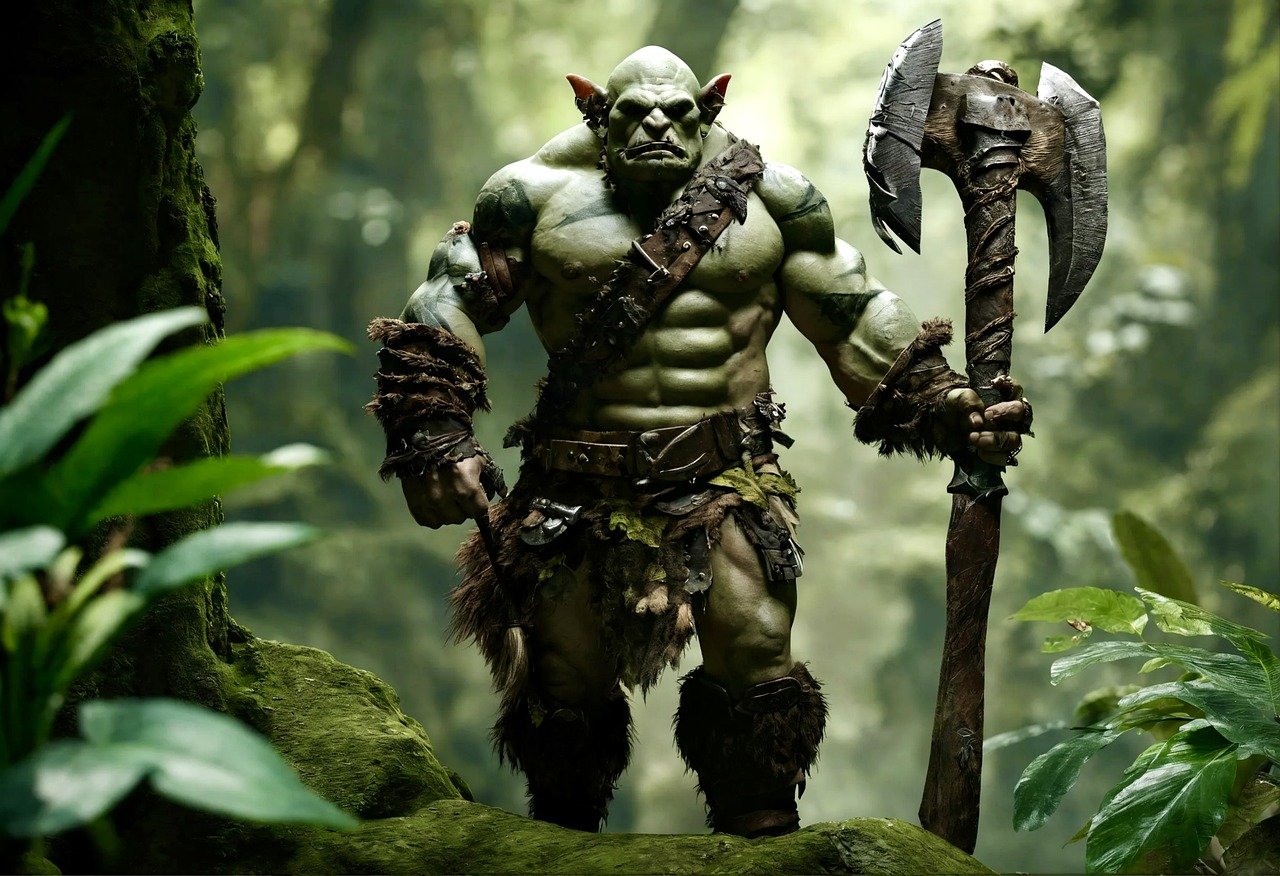
            Yes, you read that right, I want to talk about orcs. Specifically, orcs who are just trying to provide for their families. Recently, The Rings of Power has once again been making headlines, this time for testing the waters with sympathetic orcs. To any hardcore and/or longtime Tolkien fans, this notion sounds ludicrous, but it is about what we can expect from modern Hollywood. To save everyone involved from great suffering, I will avoid delving too deeply into The Acolyte, save to say that it seemed the goal of the showrunners was to make the good guys look bad. From the world of space opera to that of fantasy, it seems that not much changes. Whether or not Rings of Power is truly trying to frame the orcs in a likeable light is of little consequence. The sentiment has already been established by modern entertainment that they are seeking upheaval, reversal, and subversion in morality. Tolkien specifically created orcs to be evil, corrupted versions of greater beings, but now that any direct influence from his family is gone, that sentiment has been tossed aside.

            So, what is the solution? Firstly, we must accept that there may be no saving modern Hollywood or the intellectual properties already in their grasp. Evident by looking at ninety percent of movies or shows from the last five to ten years is the fact that they do not understand, or purposely misconstrue, what made these stories great. True, we can still watch, listen to, and read the classic, original stories, but we must not expect the same greatness that was present before. Instead, we must usher in a comeback of evil villains.

            As someone who heavily analyzes A Song of Ice and Fire, a story known for its grey morality and complex characters, I can definitively say that there is a time and place where the lines between good and evil can and should be blurred. But, in equal and opposite measure, we need stories with a clear moral scale. We need inspirational and aspirational heroes, and deplorable, maniacal villains. We need characters who stand firmly amongst virtues and vices. So no, sympathetic, family-man orcs are not a stunning and brave departure from the norm or a new angle through which to view Tolkien’s classic stories. They are an unfortunate glimpse into the stance of our overall culture today and a lamentable development in the world of storytelling. It’s not about the orcs. It’s about the deepest roots of our stories. It’s time to bring back evil villains.

Review of “The Undying Oracle” by Franklin Roberts

            Sequels of books published by independent creators have proved to yield mixed results. While some have built on the world, characters, and story of their predecessor, many have failed to live up to the expectations, or even barebones precedent set by the prior entry. I greatly enjoyed The Wizard Slayer by Franklin Roberts, a book I reviewed here previously. Though I had some issues with the pacing and dialogue, the first entry in the Wizard Slayer saga had a fun setting, a great protagonist, and a throwback plot. It was right up my alley. Now, albeit in late fashion, I have finally read its sequel, The Undying Oracle, and this is my official review. Did it live up to the first Wizard Slayer? Did it build on all the things that made the initial book great? Or did it suffer the fate of most follow up stories? Read below to find out. NOTE: THERE ARE SPOILERS AHEAD.

            Without further delay, I must say that I enjoyed The Undying Oracle even more than The Wizard Slayer. Franklin Roberts took everything I loved about the first book and improved upon it, while mostly fixing the issues I had before. I believe this book was better than his first effort in almost every way. Firstly, the characters. While there is one specific character that still did not resonate with me, almost every other character in this book is a highlight. We learn more about Krael’s backstory, and though I had my doubts about this development before I began to read, I found myself enjoying all the flashbacks and insights into how the Wizard Slayer became the legendary figure he is at the time of the current narrative. Similarly, the development of King Eledrith felt natural, inevitable, and masterfully done. His descent into nihilism, his sapping of his own will to live through the use of magick, his disdain for existence itself, was quite easy to believe. Through both the writing itself and the plot, Eledrith’s tragic fall felt earned and not forced in the slightest, which was a concern I held before. The main antagonist, the Witch Lord of Tyrithel, was a suitable “act two” villain for the Wizard Slayer, a magick user stronger than Krael who felt like both a great threat yet also a placeholder before Krael and Eledrith’s final standoff. Lorienne remains a fun returning character, but the surprise standouts were two new additions: Hazir and Zakkran. Both had unique stories of their own, yet intertwined with each other in the end. But their relationships with the returning characters were what elevated them both. Hazir proved a welcome foil to Krael’s harsh, brutish nature, and Zakkran filled the role of a sleazy, yet good-hearted host to Darreth and Lorienne.

            The setting was once again an easy positive about The Undying Oracle, just as it was for The Wizard Slayer. Of course, Franklin Roberts adds depth to his world, but the greatest improvement was merely through the addition of more locations. While the first novel took place almost solely in the city of Saidal and the surrounding outlaw kingdoms, this book spanned to different continents and times, making the world feel much larger and much more lived-in. Also, finally receiving a glimpse of Mog Muhtar was a plus.

            Also on a grander scale as compared to its predecessor, the plot of the second entry in the Wizard Slayer saga was an improvement. This book contained three main storylines: Krael and Hazir vs. the Witch Lord, Eledrith’s quest for meaning and finding the Undying Oracle, and Darreth and Lorienne’s attempt to save Krael. If I were to rank the three plotlines, they would be in that very same order: Krael, Eledrith, Darreth/Lorienne. Something about the dynamic between Krael and Hazir, as well as their impossible task of toppling the Witch Lord, made for a digestible and exciting plot. The two remaining stories were both great in their own right, though. Overall, the entire narrative weaved together well. Even the flashbacks felt like natural inclusions into the story. Sometimes, flashbacks feel as though they are wrenching the reader away from the focus of the narrative to touch on something unneeded, but in this instance, I felt they enriched and enhanced the story.

            All that being said, though, I still have some criticisms for The Undying Oracle. Firstly, though not most importantly, I was a bit let down by the payoff of the Hazir-Zakkran plot point. Once I found out that the captive alongside Krael was the same member of the Serpent’s Hand who had killed the parents of the unassuming pirate providing aid to Darreth and Lorienne, I knew that near the end of the story, they would once again encounter each other. Throughout the whole story I anticipated this meeting, but when it finally occurred, it just fell a little flat. I enjoyed the development that Hazir had committed the act with Zakkran’s best interests in mind, but their initial meeting just did not feel like it was executed to its fullest extent.

            The other main aspect of The Undying Oracle I found to be negative was the character Darreth as a whole. I just did not connect with him at all. I understand if others who read or have read this book feel differently, but that is just my feeling. Darreth’s dialogue felt too out of place for the world. He felt too casual and modern to fit into the plot (and yes, I am aware that this is a fantasy setting with some sci-fi technology, but when I say modern, I mean slang and way of speaking). What’s more, I just couldn’t empathize with him throughout the story. I reacted strongly to his death because of how it affected Krael, not because I cared for him. For whatever reason, I could not become invested in the Wizard Slayer’s longtime companion.

            So, I am quite pleased to say, The Undying Oracle is not only a worthy, but an improved sequel to The Wizard Slayer from the mind of Franklin Roberts. While it was not without its flaws, it built on all the positive aspects of the first entry and added new characters, locations, and themes that made it well worth the read. I am highly anticipating the third entry into this series. Without a doubt, I recommend The Undying Oracle.

I Have No Clue How I Feel About “Scott Pilgrim vs. The World”

Though I had first heard of Scott Pilgrim vs. The World long ago, I never had the opportunity to watch it until yesterday. Now, I have no idea what to think. I believe it may be the strangest, most bizarre film I’ve ever watched (maybe excluding Everything Everywhere All At Once). I enjoyed some of it, disliked some of it, and still have no clue how to process some of it. Will I ever watch it again? I don’t know. Will I recommend it to anyone? I don’t know. Did I like it or dislike it as a whole? I also don’t know.

Let’s start off with what I can definitively say I enjoyed about Scott Pilgrim. Firstly, the action was great. It was highly stylized, which may throw some viewers off, but I found it visceral and exciting. Similarly, the vibrant use of colors was extremely appealing. Like a comic book or arcade game, this film really popped off the screen, providing a refreshing contrast from many of the muted, gritty movies of recent times. And finally, the other positive takeaway I had from this film was the great performances throughout. While I am still unsure about how I feel in regard to the personalities and likeability of some characters, it is undeniable that the performances from the entire cast are top-notch. Everyone must’ve seen how out there this movie was going to be, but they still gave it their all. From Michael Cera to Brie Larson to Chris Evans, the cast was infinitely fun to watch.

Currently, I only have one major gripe with Scott Pilgrim, and I still may be inclined to change my mind in the future. While I went into this movie expecting it to be weird and “off-the-walls”, it was strange. I mean, it was really bizarre. I have enjoyed many hyper-stylized movies before, but Scott Pilgrim may have been the most unique film I have ever seen. It just felt much too far removed from any of my preconceived notions to be examined properly, and it really just left me somewhat shellshocked. Again, this is only a negative for now. Once I have more time to think and digest what I saw, I may change my mind.

As I just mentioned, Scott Pilgrim was unlike any other movie I’ve ever watched. So, I really have no idea what to think or say about it at the present moment. I have never been a proponent of “first time reactions” or “first time reviews”, as I believe it takes time more than anything else to decide how one feels about a piece of art, and that could not be closer to the truth than with this film. It was so jarring, so surreal, that I am still uncertain what to feel or think about it. For now, I can say that I enjoyed some aspects and disliked others, and only hope that I gain a more concrete opinion as time goes on.

Review of “Daughter of the Deep”, by Rick Riordan

I am now quite far removed from the target demographic for Rick Riordan’s work. Still, I enjoyed most of his books that were released when I was the correct age to enjoy them, and so when I received a free copy of Daughter of the Deep as a gift, I decided to give it a go and see how his writing holds up. To be frank, I was not impressed. The original Percy Jackson and the Olympians series will always hold a special place in my heart, but Daughter of the Deep just confirmed my suspicions about Rick Riordan. As time has gone on, he’s become too simple and snarky, to the point that it detracts and distracts from the story he is trying to tell. So is the case with Daughter of the Deep. There are flashes of a great work buried within, but this book is marred by surface-level characters and a style of prose that is much more tell than show.

Daughter of the Deep is Rick Riordan’s usual type of story – a young tween discovers they are part of a hidden world thought to be myth, but this time, rather than any form of actual mythology, he applies this trope to Jules Verne’s 20,000 Leagues Under the Sea. Now, to be truthful, I have never read Jules Verne. I always knew his works were touted as classics, but I had and have so many other stories I would rather read, I’ve never found the time. Nevertheless, this concept produced an interesting foundation for worldbuilding, which is one of the positive aspects of this story in my opinion. The idea to mythologize 20,000 Leagues and then turn it into an urban fantasy-sci-fi setting was unlike anything else I have ever read, and it kept me engaged throughout. I was excited to discover the new technologies and hidden secrets along with the characters, especially since I had no previous knowledge from Verne’s novels from which they originated.

However, the rest of this book left much to be desired. Firstly, while I felt the plot was average, I was hoping for more time to be spent in the fictional school of Harding-Pencroft, the supposed academy for the nautical students. I yearned to see life in that part of the setting, to see how the characters interacted and lived in this secret world. Instead, most of the book takes place elsewhere, and I was left feeling just as displaced as the characters.

Speaking of the characters, I personally did not connect with any of them in a significant way. Sure, the story and theme of a younger sibling suddenly thrust into the limelight that was supposed to be occupied by her older brother was a compelling idea, but the dialogue and internal monologue of Anna Dakkar did no favors in making her seem likeable. She wasn’t abysmal, but she also didn’t feel too heroic.

But, the worst sin Daughter of the Deep commits is telling instead of showing. Throughout primary and secondary schooling, all English/Language Arts teachers repeat the same cliché: Show, Don’t Tell. Yet, Rick Riordan does the exact opposite all throughout this book. Setting aside the fact that Daughter of the Deep is in first-person present tense, a strange choice to be sure, the entire novel is rife with characters telling us things. They tell us how they feel, they tell us how things work, they tell us things they already know. It is a simple, yet glaring mistake for a writer of Rick Riordan’s caliber, and one that feels like it could’ve been fixed if he’d just had a few more people around him who were willing to say “no”. It makes Daughter of the Deep feel amateur, unpolished, and much too direct.

I am fully aware that Daughter of the Deep is a middle grade book. That doesn’t mean I cannot critique it, though. While the worldbuilding and potential was certainly there, the book lacked deep characters, a stable setting, and most of all, subtle, indirect prose. Riordan’s prior works, especially his earliest books, were always meta and fun, but they still felt professional. Daughter of the Deep, meanwhile, felt rushed, under-edited, or both.

Exploring Fiction Feature #7: “The Sorcerer’s Apprentice (2010)”

Sometimes, it feels great to hop off the grimdark train and catch a ride on the refreshing Positivity Express. Throw in a little nostalgia, a little cult classic, and a pinch of camp, and you have The Sorcerer’s Apprentice (2010). Directed by Jon Turteltaub and starring Nicolas Cage and Jay Baruchel, this film was a personal favorite from the moment I first saw it, and even though it fared poorly in its initial run, I cannot help but go back to it even now if I want a pure, family-friendly fantasy comedy.

The Sorcerer’s Apprentice sees Dave Stutler (Baruchel), a physics nerd and current college student, thrust into an unlikely apprenticeship at the hands of ancient sorcerer Balthazar Blake (Cage). Dave is the “Prime Merlinian”, the destined descendant of Merlin prophesied to defeat the evil witch Morgana Le Fay for good. Facing obstacles from all sides, including romance, rival factions, and a plot to destroy the world, Dave must embrace his destiny and fulfill the lifelong quest of his tireless master.

There may be a chance I am viewing this movie through slightly-tinged nostalgia goggles. Still, though, like many other entries on Exploring Fiction Feature, I honestly cannot fathom why general audiences disliked this film. Sure, upon rewatch years later the beginning felt a little rushed, and sure, the romance is a tiny bit cheesy, but it was always like that. The Sorcerer’s Apprentice embraced those flaws so wholeheartedly, I hardly even noticed them. So, while I can understand the common critiques of this movie, I do not agree.

What makes this film really work is Jay Baruchel. Of course, Nicolas Cage is Nicolas Cage here, and that is earnest praise, but Baruchel pulls off his character to perfection. He feels and acts exactly like a grown-up nerd who lives with the embarrassment of a public incident in his youth. What’s more, his gradual progress from anger to reluctance to acceptance of the magical world around him and his place in it feels completely seamless. But best of all is his awkward-yet-endearing romantic chemistry with Teresa Palmer, who plays Dave’s love interest Becky Barnes. The two are great together, and though the subplot is admittedly somewhat campy, it does feel genuine. Their interactions are exactly how you would imagine a slightly-confident nerd talking to his childhood crush to be.

The story of The Sorcerer’s Apprentice can make no claim to stark originality or deep worldbuilding, but it doesn’t need to. It is a well executed low stakes to high stakes story, with our protagonist’s growth fueling the change. True, the ultimate villain Morgana Le Fay is mostly a Macguffin until the climax, but Alfred Molina as Maxim Horvath is a charming yet chilling antagonist in her place.

One other aspect of this film bears mentioning, even in its own designated paragraph. The manner in which Balthazar and Dave, master and apprentice, finally began to appreciate each other’s situations and connect with each other was masterfully done. When Balthazar saw Dave falling in love in the middle of their training, he recognized himself in his apprentice. He told Dave as such, revealing the story of himself and Veronica long ago in the days of Merlin, and of the sacrifice she made for him then. Upon sharing this moment, Dave and Balthazar beheld each other in a new light. They gained respect for each other, but also empathy, as Dave sympathized at his master’s sacrifice, and Balthazar saw in his apprentice the same spirit of young love he’d once possessed. This bit of storytelling was masterful, and really brought The Sorcerer’s Apprentice together.

Box office failures are sometimes destined to flop, but some are simply overlooked or underappreciated. This was the case, at least in my opinion, for The Sorcerer’s Apprentice (2010). Based off a beloved yet barebones Disney project from the days of Walt, this film was full of charm, heart, and laughs, and shone through with its fun cast and warming message. Like so many great stories, it seems to have fallen to the wayside of time, but if I can help it, The Sorcerer’s Apprentice will soon garner the recognition it deserves.