
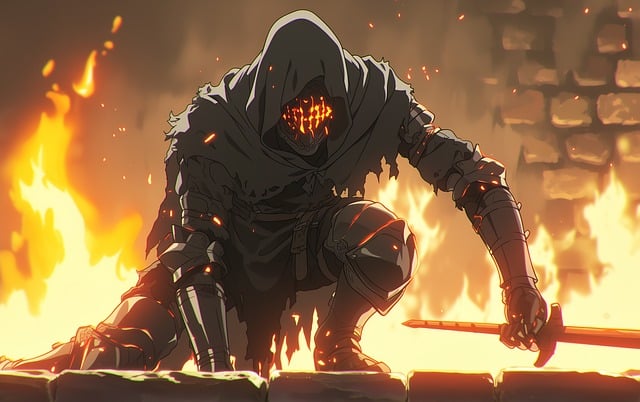
On a whim, I decided to pick up The Ember Blade. As an avid fantasy reader, I had and have already planned out the books and series I need and want to read, and so there is little space in my schedule for anything spontaneous. However, for some time, The Ember Blade has caught my attention, as I had heard little about it and knew even less. Yet it looked like a fantasy book, both in cover design and length. It had a fantasy-sounding title. So, I decided to slot it into my reading schedule on a whim. Over the past weeks, I read the entirety of The Ember Blade. And to be honest, it was mostly underwhelming. But why? Here, I wish to walk you through why exactly, in my opinion, The Ember Blade left much to be desired.
Firstly, I do want to iterate that there were enjoyable aspects to this book. The plot of The Ember Blade specifically shines. It is more tome than novel, but the story rarely drags. From beginning to end, there is always something exciting happening, and the many POV’s to not detract from the experience or enjoyment at all. The plot of The Ember Blade is both a YA coming-of-age fantasy, while also being an interesting study on friendship and revolution, while further still adding a flavor of the heist subgenre near the latter half of the story. Twisted all together, this mix made for a unique and fast-paced plot that far outshined the characters. But more on that later.
The other great positive I drew from The Ember Blade was the character of Garric. He was the most layered and nuanced individual in the narrative by far, even though his first POV chapter did not occur until far into the story. But even on the surface, his characterization as a mentor who despises his pupil was rather refreshing and deep. Again, I have much more to say on the characters of this work later on, but the character of Garric, or Cadrac of Darkwater, was thoroughly interesting and well-realized.
However, though it pains me to say, I found The Ember Blade lacking in most other aspects. Though it is not the most major gripe I have, the first I will highlight is the worldbuilding and setting. If you know anything about me from my videos or previous reviews, you will know I adore good worldbuilding. If the setting and world of a story are fun and interesting, and if at least one good character exists, it is usually enough to entice me. But the setting and worldbuilding of The Ember Blade was deeply dissatisfying. Over the time since I finished the book, I have been mulling over why exactly I found this to be the case, and after much thought, I believe I have a coherent answer. The setting and worldbuilding of The Ember Blade feels entirely artificial. The art of building a fantasy world is a difficult one to master. First, if one is an avid and enthusiastic world builder, it can be almost impossible to keep one’s story in mind and not go too overboard. But if one has no mind for it, the task can seem tedious and unnecessary in its own right. The iceberg analogy can best be used to describe good worldbuilding. What the reader sees is the tip of the iceberg, and the job of the author/world builder is to paint the illusion that the rest of the iceberg (the rest of the world beneath the surface) is both vast and believable. Though the worldbuilding of The Ember Blade gave the idea that the world was large and full of religions, cultures, and kingdoms, its believability underscored what the author was trying to convey. The religions of the Aspects and The Primus felt copy-paste (though the Bone God of the Skarls was intriguing), the different races all felt one-note and shallow, and the legends and stories just seemed… shabby. The world and setting of The Ember Blade was filled to the brim with clichés. The combination of both predictability and inauthentic worldbuilding greatly soured me to this story, and though the plot kept me turning the pages enough to finish the book, these lesser aspects drew me out of the story (or just failed to get me invested at all).
But an even larger problem with The Ember Blade, and what I had considered the largest until the finishing chapters of the story, was the characters. Specifically, the protagonists. Aside from Garric, mentioned earlier, almost every hero in the story ranged from boring to insufferable. The main character, our heroic everyman Aren of Shoal Point, was annoying, pompous, and generally irksome to read. Especially during the plot point when he intended to sell out Garric, I loathed him, and though Aren backed down from this urge, it was difficult to forgive. Cade, his best friend, was at least more sympathetic as an awkward, bumbling, homely oaf-type, but I never really connected with him on a deeper level. Vika, the druidess stand-in for Gandalf, as well as Fen, Aren’s love interest, were both interesting enough. Grub, the barbaric warrior of few words and savage customs began as a strong character, but his tendency to skip words, as well as his casual slang, broke my immersion on many occasions. One of the most horrid characters, however, was Mara. Introduced almost three-quarters of the way through the novel, when the heist segment is finally getting underway, Mara is a late addition to the gang (though a longtime freedom fighter). She is a genius and inventor kept down by the tyrannical, misogynistic Krodan society, intent on proving the worth of women a million times over. That’s all well and good, although such a conflict is much too modern for my favorite flavors of fantasy, but even so, she was just a horrible person. Mara claimed to be part of this budding rebellion for freedom as much as for her particular agenda, but at every chance, she was selfish and snobbish to the utmost degree. Her snide outlook on life and society was not endearing or relatable, just grating. Though the author attempted to make her plight empathetic, Mara’s demeanor and personality counteracted any semblance of sympathy drawn forth by the story.
The problem of the characters in The Ember Blade, however, can all be traced back to Garric. Yes, the character of Garric was one of the few positives I highlighted earlier. But the way he was handled by the author, and how he was viewed by the other characters, particularly Aren, made everyone else so much worse by comparison. At first, Garric was a mystery, a man who despised our hero for reasons unknown. But then, as the story progresses, and we learn more about him, we see why he has become this way. He was betrayed time and time again by ones he thought were friends. He attempted to incite countless revolutions for his fellow countrymen, but only he possessed the fortitude to keep the dream alive. And when all else failed, he was the only one with the gall, the determination, the willingness, and the right amount of jadedness to do what must be done to achieve the necessary end. Both in the pages of The Ember Blade and in the backstory detailed within, Garric was crossed by the man he considered his best friend, the one supposed to stand at his side long after everyone else had fled or died. Such betrayals would break the spirits of most other men, but they only hardened his heart. Then, he’d organized numerous failed campaigns to rally his fellow Ossians to the cause of freedom, which crumbled around him because the others couldn’t bear the cost of such rebellion. Finally, it drove him to an attempt which he knew would take his own life, and was undoubtedly extreme, but one he believed would spark the revolution. In my opinion, Garric was far and away the most interesting, and most heroic, character. Of course, he was the representation of a man willing to sacrifice means for ends, but his intentions were noble. Garric yearned for a free Ossia, and he’d tried time and again to do so through the standard methods. Yes, he was driven to a suicidal, terroristic plot, but I still found him to be the true hero of the story. But the way Aren, our “hero”, viewed him, and surely the way the author wanted us to view him, both turned me against our protagonist and the book itself. At first, Aren hated Garric. It was an understandable sentiment, for the man seemed to hate him back for no reason. But as the pair inevitable grew closer and learned more about each other, the latter became a mentor, and even idol, for the former. Yet it did not stop Aren from almost betraying Garric. And then finally, once Aren learned the truth, that Garric was on a suicide mission rather than a crusade to steal the Ember Blade, he reverted right back to despising him. Our main protagonist was blind, or at least apathetic, to all Garric had suffered in his long years of lonely rebellion. After all this time, he was suddenly just back to being a bad man because his endless attempts at revolution had failed. He’d been pushed to the brink through betrayal and defeat, but Aren saw him as a man not worth following because of his final decision. As previously stated, I found Garric to be the most relatable, empathetic, and strong character in The Ember Blade. So, when our other “heroes” drew opposite conclusions, it felt as though I was being told what to think rather than forming my own opinions.
Poor characters and shallow worldbuilding aside, the final, and greatest, problem I had with The Ember Blade did not surface until the end of the book. It may have been present before, though I just didn’t see it. But in the closing pages of the novel, several sentences explicitly encapsulate my final issue of The Ember Blade: its themes. Listen to these sentences, taken straight from the book:
“Right and wrong were just a matter of perspective. Stories and histories changed depending on the teller. Justice was an illusion. All that mattered was what you believed.” (The Ember Blade, 803).
And similarly:
“In the end, Garric wasn’t the villain Aren’s father had warned him about, nor the hero he’d once appeared. There were no heroes or villains here, or anywhere. He was just a man, as flawed as the next, and he made his choices like the rest of them. Whether they were good choices or bad was a matter of perspective.” (The Ember Blade, 819).
I, for one, am sick of this kind of writing and these kinds of ideas. Grey morality and moral relativism have been played out to their extremes over the past decade, and they leave one with a sense of emptiness rather than purpose. These ideas inspire no confidence, and while they can be interesting to study, the well has run dry. I yearn for heroes that believe in right and wrong, that dispense justice and protect the innocent. All stories must have conflict, and the best tales feature internal conflict as a character struggles against doubts and different viewpoints. But heroes are called heroes for a reason, and that reason is not because they wallow in the carefree view of moral relativism. These clearly stated themes near the end of the book only solidified my thoughts on the characters, setting, and story as a whole.
Overall, The Ember Blade, while containing fascinating elements, was not worth my time. Though I finished the book due to the speed and excitement of its plot and plot points, the shallow worldbuilding, unlikeable characters, and tired themes turned this novel into a chore. My list of books I have yet to read is still quite extensive, and in the time it took to finish this novel, I could’ve crossed off quite a few. So, I do not recommend The Ember Blade.
 Russell A. Wells