
The Wizard Slayer, book 1 in The Wizard Slayer Saga by Franklin Roberts is a fantasy story infused with a pure sword-and-sorcery spirit. Given that I just finished reading this book, I decided I had to talk about it.
First, I’ll explain my thoughts without dropping spoilers so that if you like the sound of this book, you can still see what I have to say before you pick it up for yourself. Just know, later I will be talking spoilers. When that happens, I’ll give a warning.
The Wizard Slayer wastes no time, dropping us straight into a world of sword and sorcery. This unnamed setting and the worldbuilding behind it was the strongest component of this book. From the mega city of Saidal to the savage Outlaw Kingdoms to the hints at a past steeped in technology and development, every little detail added to the immersion. Roberts’ take on classic fantasy races was also a refreshing and welcome change from the norm.
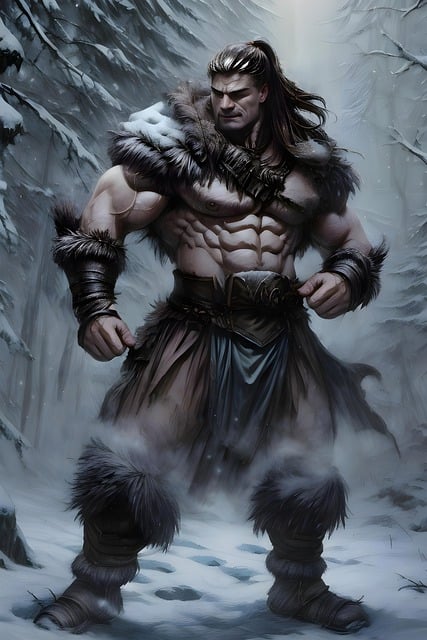
Concerning characters, the story introduces us to Krael, a barbarian harkening back to Robert E. Howard’s Conan, whose sole mission is to hunt and kill magick users and rid them from the earth. We’re also introduced to a surprisingly large cast of side characters, including Eledrith, a prince with a strange ubringing, and Morgvid, an assassin hired to hunt the Wizard Slayer. Quite like the setting and worldbuilding, the characters all felt unique and truly inspired, far from shells of people or classic trope fillers. That being said, some of the dialogue left something to be desired, and made some characters come off as wooden or just strange. The characters of Darreth and Eledrith in particular suffered, and much of the dialogue came from them. Many times their conversations and sentences sounded awkward or too complex for their own good. Ironically, the most believable character in his dialogue style and use was Krael, who as a savage barbarian hardly spoke at all. The other main low point involving characters were the love stories developed in the novel. They both could’ve used more time to be fleshed out, though the main one ended in a twist I didn’t see coming at all.
The plot of The Wizard Slayer took many more twists and turns than I expected. From the synopsis of the book, I believed it would be straightforward, but I was wrong. A lot of events occurred in this book. That’s not to say this was a bad thing, though. Everything flowed and connected quite seamlessly. The Wizard Slayer slays a lot of wizards, so the book lived up to its title. Both Krael and Eledrith’s stories had me engrossed, and when they often crossed paths, I was invested even more. One thing that may bother you, and the biggest criticism I have for the book however, is that it really could’ve used another proofread. A few names throughout the book are misspelled at times, and the book has a lot of wrongly used homophones, such as using “knocked” an arrow instead of “nocked”. So, I was able to look over these without it breaking my immersion too much, but typos and errors that could’ve been caught in a final proofread are present.
Overall, without spoiling anything, I can safely say that I recommend The Wizard Slayer by Franklin Roberts. If you’re into sword and sorcery, or looking for a modern equivalent to a Robert E. Howard story in feel, this book is for you. If you want a fantasy book that has a unique take on classic tropes without deconstructing them, this is a good bet.
Now, let’s get into some spoilers. As far as setting and worldbuilding, this book had exactly what I was looking for in the fantasy genre right now. It’s a fantasy world, but it originated from a sci-fi past. Broken machines such as the Dead Giant dot the landscape, and there are hints of computers and ancient technological empires like that of Ashkazanar that fell and were never revived because no one knew how to work the technology. Brilliant. Also, like I noted earlier, the twist on common fantasy races was refreshing. In this world, elves are hunted for their blood, which aids in magick, and are thus quite rare and almost extinct. Dwarves, meanwhile, have lived in caves so long that they somewhat resemble the Falmer of the Elder Scrolls: shriveled, primitive creatures that have become incestuous and cannibalized, far from the great race they were in ages past. The city of Saidal, with skyscrapers in a fantasy world, and the drenoch people, a savage race of man captaining iron ships were also inspired worldbuilding choices.
There isn’t anything new I have to say about the characters, except that I really dug them all, no matter how large or small their role. The main cast of Krael, Darreth, Eledrith, Sir Garrick, Lorienne, Count Ordric, and Morgvid were all compelling or interesting, and even small characters like Arngrim the Scourgefather and Akhred the Eternal made me want to know more about them. Still though, like I noted earlier, the worst aspect of the characters was the dialogue, which could’ve been more concise or realistic in my opinion.
Finally, let’s talk a bit more about the plot. While Krael killing multiple wizards was a lot of fun and the best part of the book, I enjoyed Eledrith’s storyline of coming into his own as a prince just as much. How he earned the loyalty of not only his subjects but of foreign mercenaries was well executed by Roberts. But getting back to Krael, there is one issue I have with his plotline: I felt as though the inciting incident for his flight from Saidal wasn’t made as clear as it could’ve been, or that the stakes behind it weren’t shown to be as important as they were at first. Krael didn’t want to be a puppet to Count Ordric, and though that’s understandable, it was hard to pick up on why that was such an issue until much later in the book. Speaking of Ordric, his descent into hysteria and his feud and battle with Krael was a satisfying conclusion to the A plot of the story, and it couldn’t have been much better. Pivoting now back to Eledrith, his romance with Morwenna was okay, but I personally wanted them to spend more time together on page in order to better believe their romance. The end of the novel left me stunned though. Krael accidentally killed a bewitched Morwenna in his quest to slay Ordric, turning Eledrith against him in the process. This in turn drove Eledrith to decide he could dabble in magic, meaning that Krael will ultimately have to try and kill him. Now that’s a good twist, and a promising premise for the rest of the series.
So, while The Wizard Slayer by Franklin Roberts was far from perfect, it met my expectations as an indie fantasy book. It falls victim to multiple issues plaguing self published books today, but the contents and creativity of the work catapult it past those hindrances. Once again, I can say I recommend The Wizard Slayer.
 Russell A. Wells